Effects of Wildfire on Island Fox Survival and Productivity – 2007 Catalina Island Fire Study
In response to the wildfire currently burning on Santa Rosa Island, California, there has been an outpouring of concern for the unique wildlife that inhabit the island, particularly the island fox. While working on Catalina Island, we had a rare opportunity to assess the immediate effects of wildfire on island fox survival and productivity following two large fires that had occurred at different times of year. Our study may provide some insight into what to expect on Santa Rosa Island in the coming months.
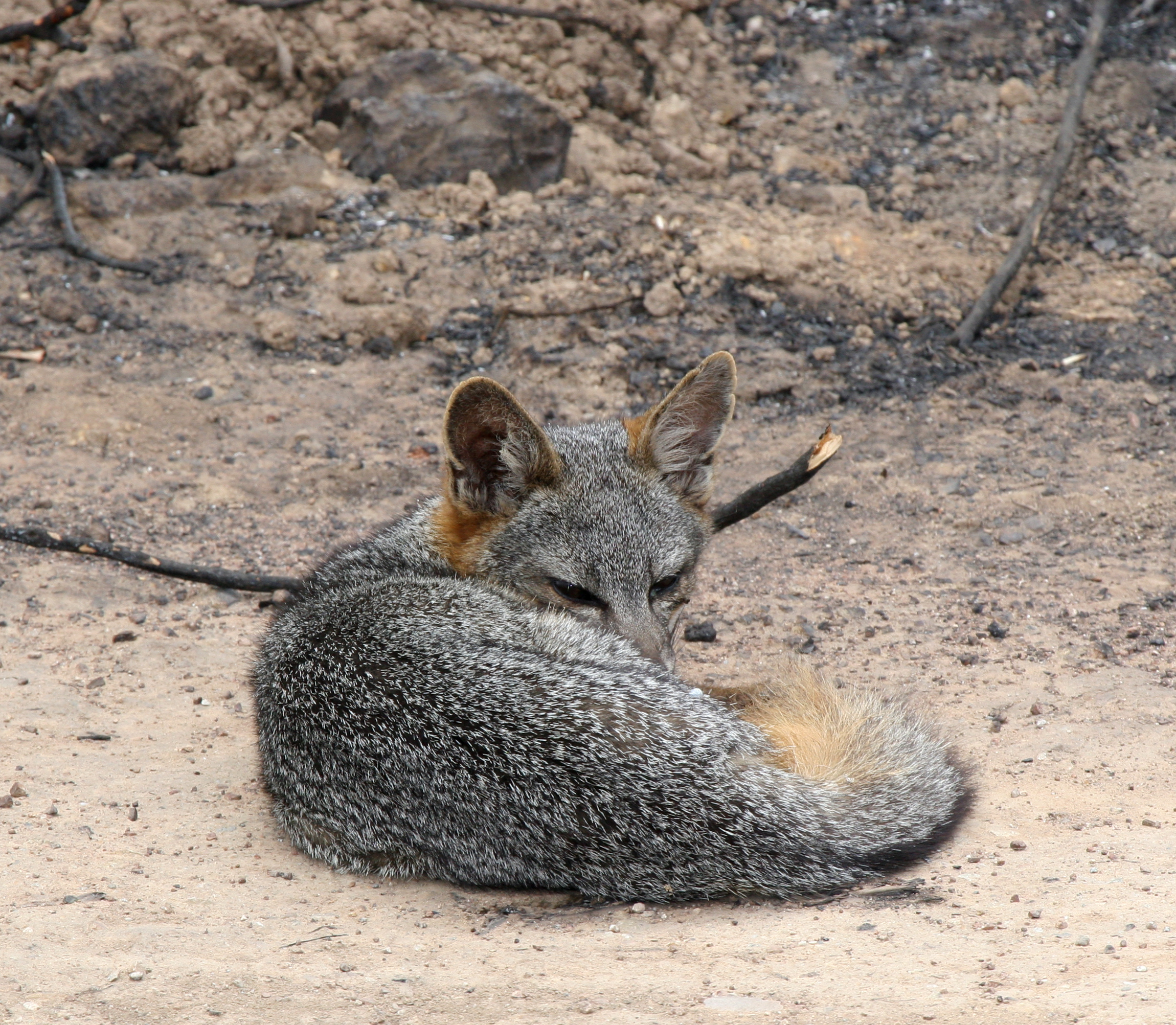
California Channel Island Foxes
Island foxes exist as six endemic subspecies, one on each of the six largest California Channel Islands. Due to precipitous fox population declines, four of these six subspecies were listed as endangered under the federal Endangered Species Act.
Bald eagles disappeared from the Channel Islands in the 1960’s after the bioaccumulation of the pesticide DDT, which had been dumped into the ocean, caused the birds to lay thin-shelled eggs that lost moisture or broke before hatching. In their absence, Golden eagles, a primarily terrestrial predator, became established on the Northern Channel Islands and began decimating the island fox populations on Santa Rosa, San Miguel, and Santa Cruz.
The decline of the foxes on Catalina Island was caused by an outbreak of canine distemper virus (CDV). Gene analysis confirmed that the virus was closely related to raccoon CDV, but because no raccoons were on the island at the time, researchers hypothesized that a pet dog, which can be transferred on and off the island without restriction, was the likely carrier. Several stowaway raccoons have since been detected on and removed from the island, suggesting that the outbreak was most likely introduced directly by a raccoon.
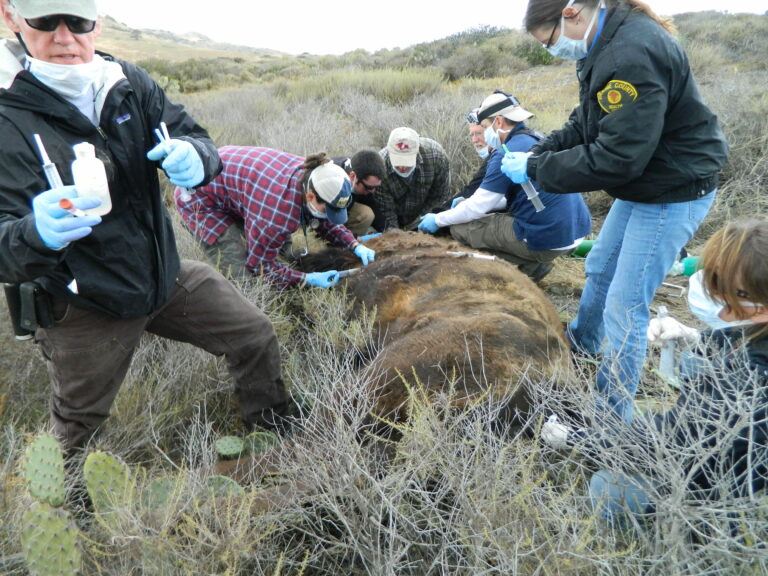
An extensive island-wide trap/mark/recapture and vaccination effort was initiated in response to the declines and has been carried out annually on all six islands where island foxes occur. Captive breeding, injury treatment, rehabilitation, and threat abatement actions, including the removal of golden eagles and reestablishment of bald eagles, were also implemented during the early phases of the recovery efforts.
In response to the rapid recoveries, foxes on the northern Channel Islands have been removed from the endangered species list and downlisted to threatened on Catalina Island. The potential for another disease outbreak on Catalina Island remains high, so some protective measures remain in place.
Wildlife and Wildfire

Fire affects animals at the individual, population, and community levels. The ecological relationship between fire and animal communities is poorly understood, and little is known about the effects of fire on the majority of species in California. Most research into the effects of wildfire on wildlife has focused on mainland populations of small mammals, reptiles, and birds. For relatively small vertebrates, fires can and do cause substantial mortality, and can result in local declines or extinctions in areas following a fire.
Despite potential population impacts on small vertebrates, most researchers agree that, at the regional population level, mortality effects are very small, if not negligible. Although there is a potential for a significant local mortality for some species of small animals, a number of species, such as the closely related gray fox, are capable of retreating from oncoming flames, even if they remain within the immediate burn area.
Seasonality of Wildfires in California & Island Fox Parturition
Of all fire regime attributes, fire seasonality may have the greatest potential to affect individual animal populations. Island fox parturition and rearing occur during spring and early summer (April–June), prior to the general California fire season in late summer and early autumn (August–November). Pups emerge from their natal den at 3–4 weeks of age, with most seen in early June. By late summer, pups are highly mobile and abandon their dens to forage with their parents daily in preparation for dispersal by autumn.
With continued increases in island residents, visitors, and interior activities on many of the California Channel Islands, there is greater potential for human-caused fires to ignite outside the traditional fire season. This may result in significant pup mortality if fires occur when pups are in dens and unable to flee from oncoming flames. Non-seasonal fires may also negatively impact native plant species and local vegetation communities, thereby producing considerable short-term and long-term wildlife displacement due to habitat alteration.
Fire History on Catalina Island (1915 – 2008)
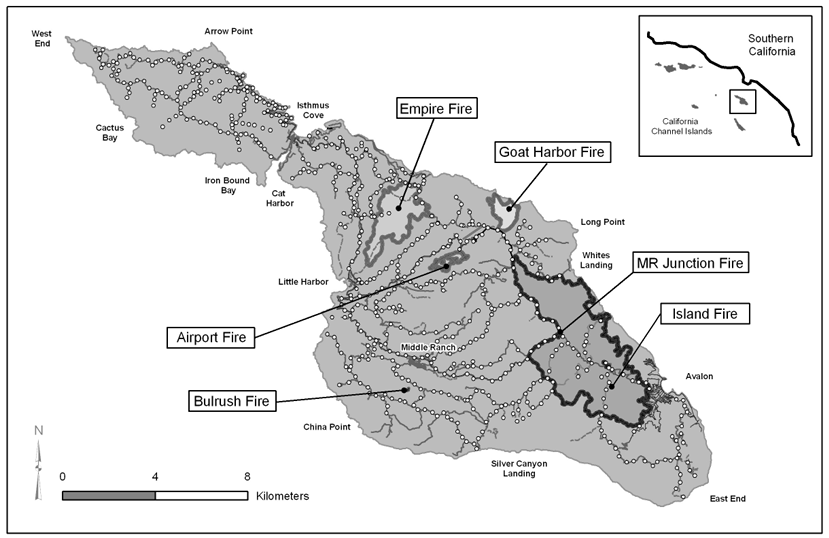
The recent (ca. 100 years) fire history on Catalina Island is relatively well documented. Based on personal interviews, newspaper articles, and Los Angeles County and Catalina Island Conservancy records, current information suggests that approximately 40 fires larger than 0.02 km2 (5 acres) have been documented on Catalina Island between 1915 and 2008. Only one of these fires was ignited naturally via lightning.
Six fires were documented in the island’s interior between 1999 (the year of the fox decline) and 2008 (the year this study was conducted). Two of these fires, the Empire Fire, a 4.3 km2 (1063-acre) lightning-ignited fire on July 22, 2006, and the Island Fire, a 19.26 km2 (4760-acre) accidentally ignited fire on May 10, 2007, collectively burned 23.56 km2 (5823 acres), or approximately 12% of Catalina Island.
The Objectives of the Study
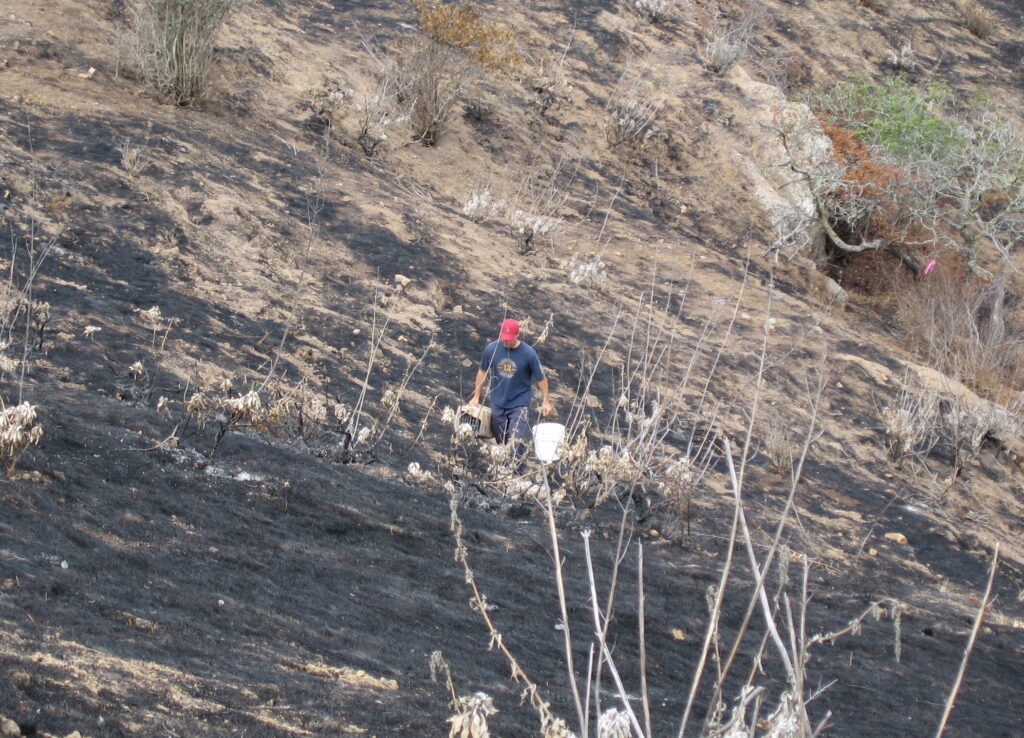
A significant advantage of this study was that we were able to monitor marked foxes both before and after multiple fire events within the fire-affected areas (at the local level) and at the population level. This was fortuitous and resulted from a unique set of circumstances. The timing of the two fire events examined in this study also allowed us to compare the immediate effects of fire on foxes during the sensitive parturition season with those during a less vulnerable time of year.
Using annual island-wide trapping data and capture trends, our objectives were to:
- Assess the abundance of marked foxes before and after each fire event at the local and population levels.
- Compare the abundance of fox pups and the ratios of pups to adults before and after each fire event at the local and population levels.
- Compare the ratios of males to females before and after each fire event at the local and population levels.
- Attempt to assess the apparent survival of specific marked adults based on their recapture post-fire
Results and Discussion
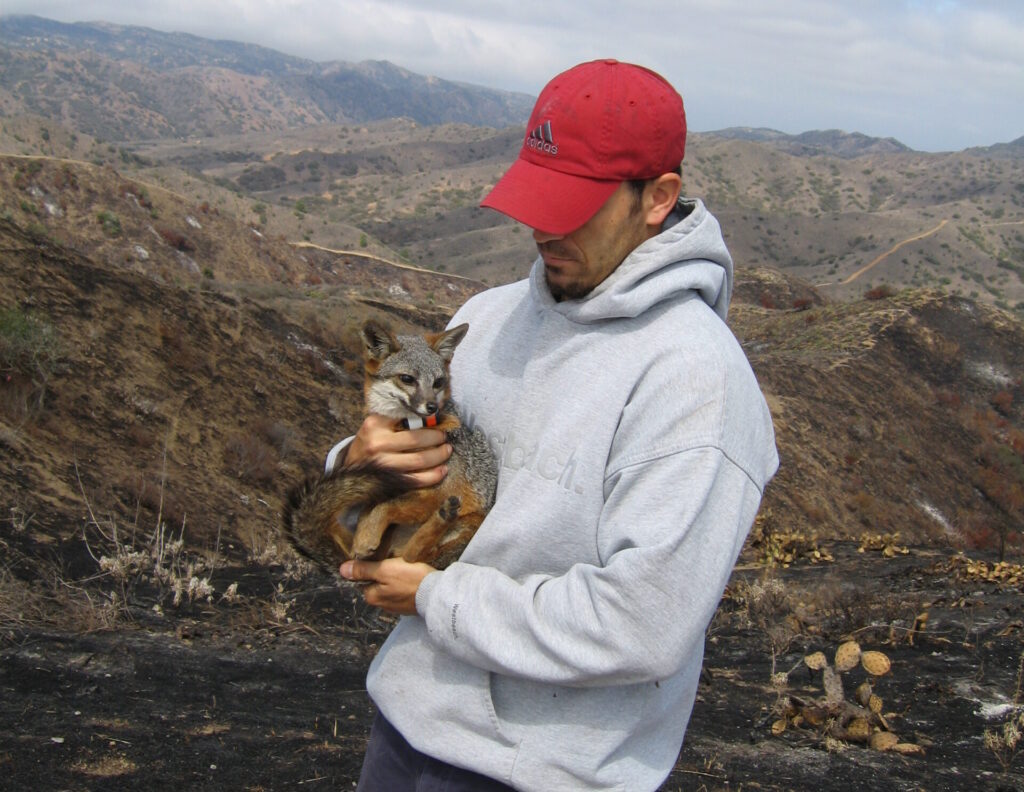
A fortuitous set of unique factors provided us with an exceptional opportunity to quantify the potential immediate effects of a wildfire event on island fox survival and productivity. The level of monitoring in place before either fire event recorded the status of island foxes in each area. Most investigations into the effects of wildfire on wildlife populations have been limited in this regard, as studies are often initiated only after a fire event.
We had the rare opportunity to follow marked individuals from a population in which approximately 71% of the overall study area had been systematically sampled for several years prior to and at least two trapping years following each fire event. The timing of the Island Fire also enabled us to learn about fire effects during the parturition season (April–June), when foxes are most vulnerable; this situation would be extremely difficult to replicate both legally and ethically.
Island Fox Dens are Simple Structures
Similar to its mainland relative, the gray fox, the island fox uses a den only for parturition and pup rearing, which generally occurs from early April to mid-June. Island fox dens are usually simple structures that include brush piles, small caves, rock crevices, man-made structures, hollowed limbs or stumps, or, in the absence of existing structures, a simple tunnel may be dug.
Most of these simple structures would offer little safety in the event of a fire. Other studies investigating fire effects suggest that animals taking refuge in burrows or dens may be more susceptible to fire due to prolonged exposure to elevated temperatures and an increased risk of suffocation.
Island Fox Behavior in Response to Wildfire – Meet Burny Boots
Captive adult foxes have been documented carrying their young to new den locations within their enclosures. However, it is unknown what behavioral alterations adult foxes would exhibit in the wild during a fire event that occurred when pups were completely dependent and had limited mobility. It is possible that, due to pup dependence, adult foxes may have remained in or returned to hazardous areas, increasing their risk of injury or death. Several observations of foxes returning to the burn area while flames were still present were documented during the Island Fire.
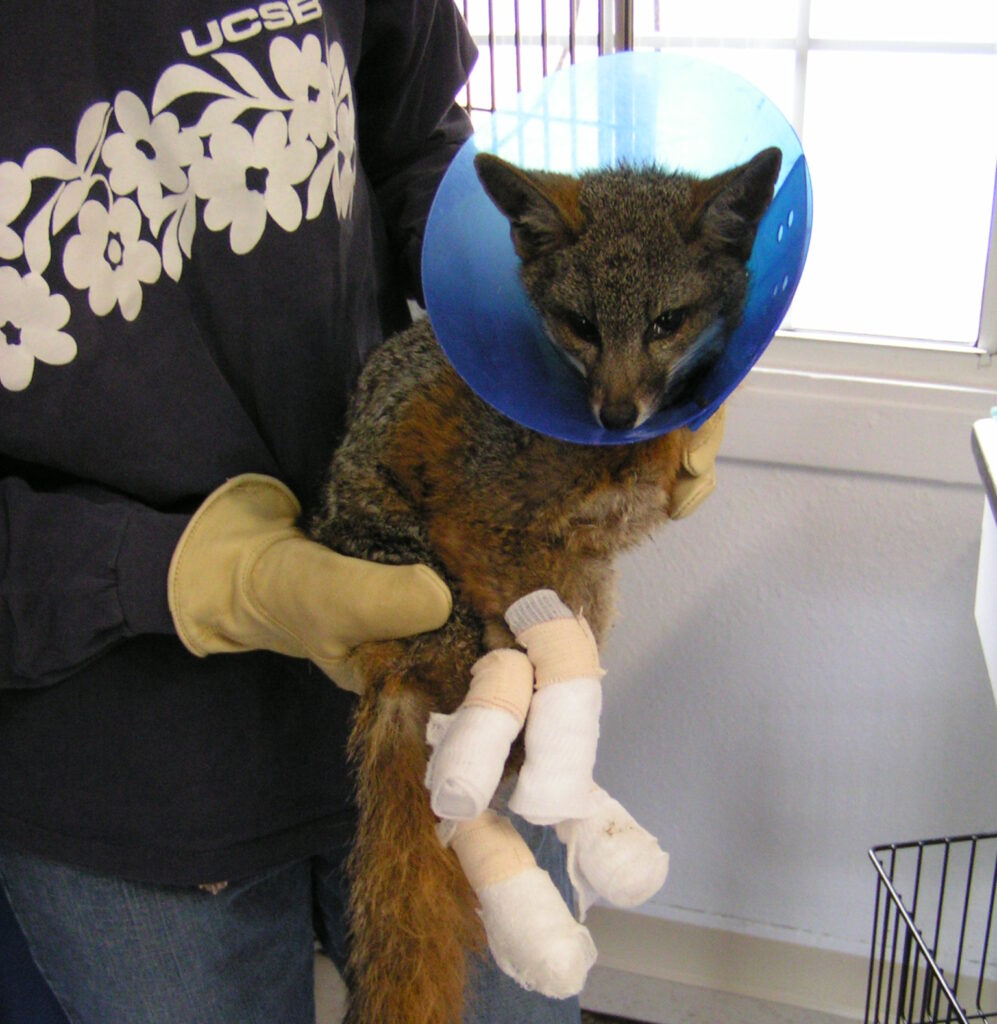
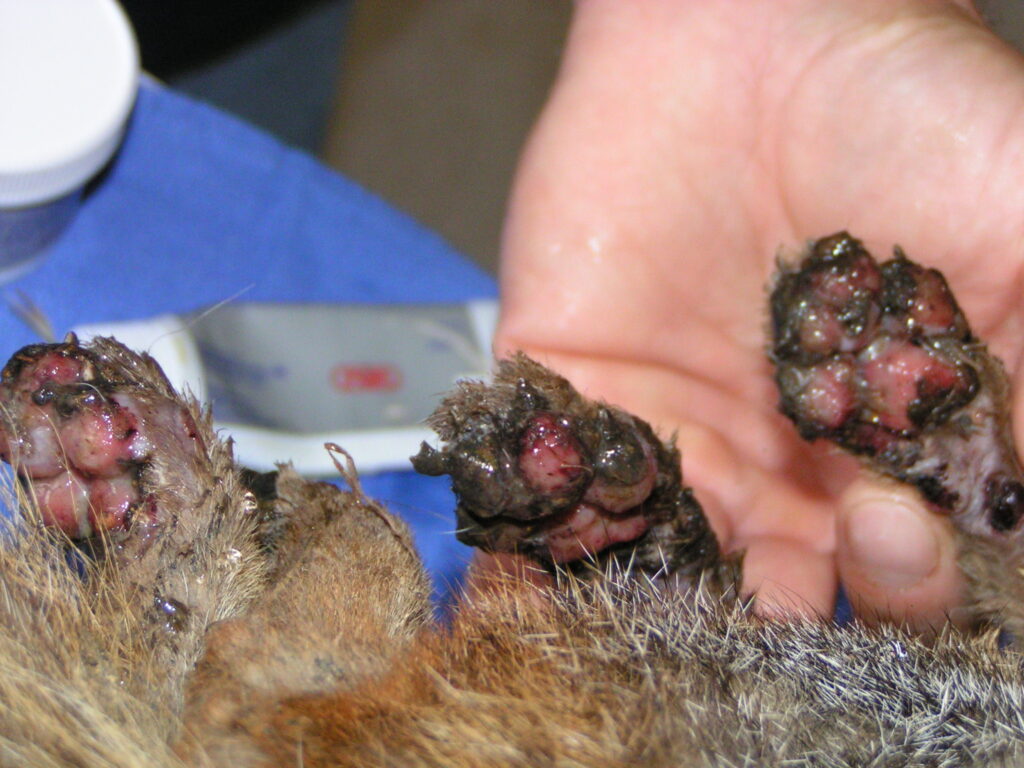
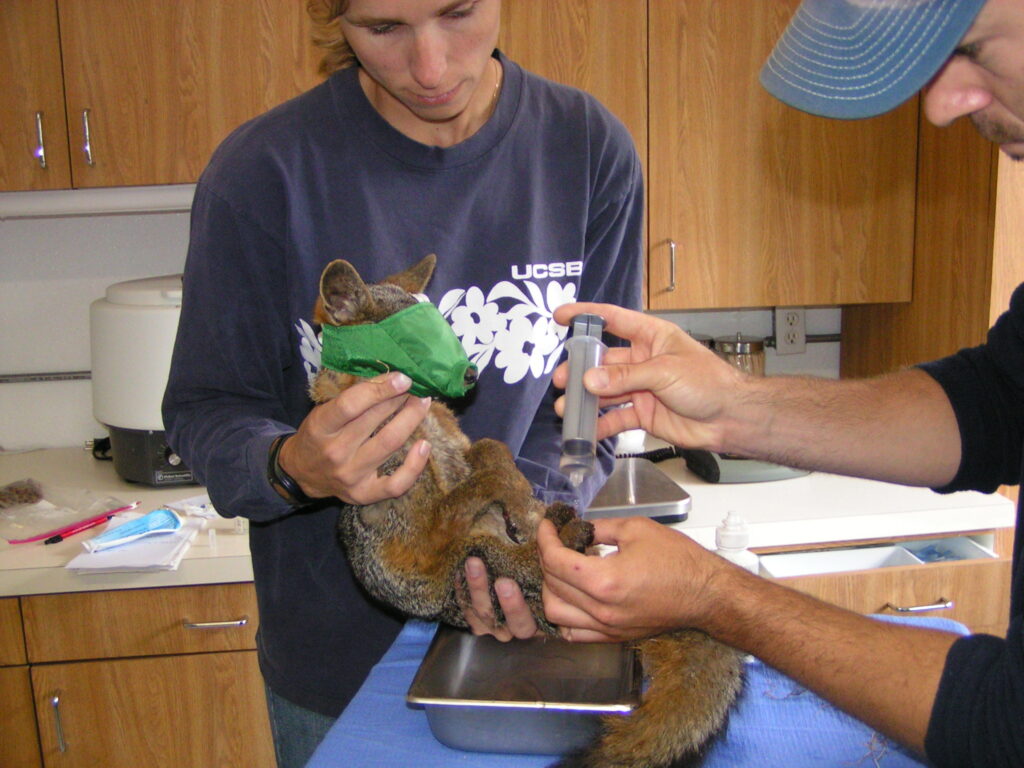
An injured adult female fox showing signs of nursing was also captured and provided with veterinary treatment. Her injuries included severe burns to all four paws, suggesting that she may have returned to a hazardous area, perhaps to search for pups, after initially fleeing. This fox fully recovered from her burns after extended treatment and was ultimately released back into the wild.
Our comparison of recapture results between annual trapping efforts conducted during years with large documented fire events and those with no fire activity provided no consistent evidence that either fire event influenced the survival of marked adult foxes at the local or population level. As suspected in this case and documented in similar animals, adult foxes were able to retreat from the oncoming flames.
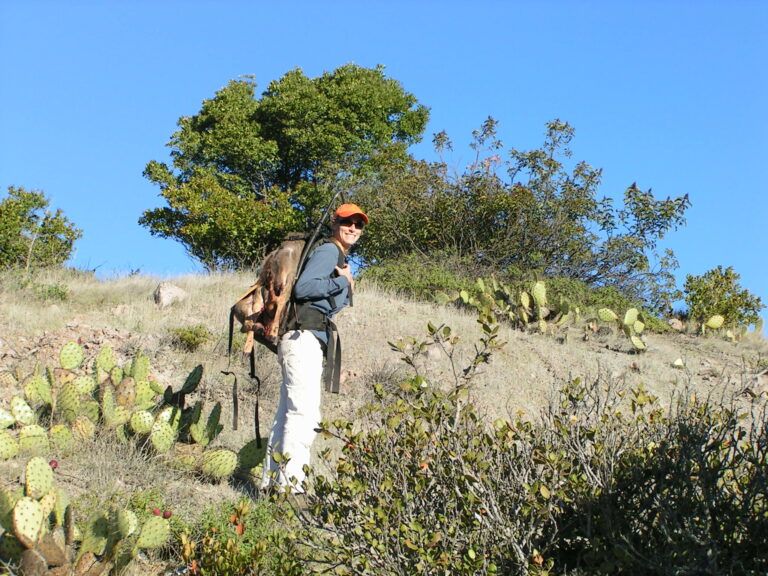
This was supported with data from 6 adult foxes (3F:3M) fitted with radio collars prior to the Island Fire, which left the affected area during the fire and later returned. All 6 collared animals were monitored weekly before and after the fire event for the remainder of the year. All 6 animals survived the fire without injury.
We also did not find a significant difference in the ratio of adult females to adult males compared pre- and post-fire, suggesting that the behavior of nursing mothers did not influence their survival. If adult foxes were injured or killed during either fire event, the numbers were not at a level distinguishable from the recapture variability documented over several years.
Additional post-fire annual trapping efforts would likely detect additional survivors and strengthen the above statements, but the fate of foxes still undetected could not be linked to the fire events.
Post Fire Pup Abundance and Pup to Adult Ratios
The similarities in the relative abundance of pups and ratio of pups to adults documented at the local level before and after the Empire Fire (1:3 and 1:4, respectively) would suggest that at the time of this fire (July), fox pups were sufficiently mobile to avoid the oncoming flames and independent enough not to return to the area before the hazards were extinguished.
The timing of the Island Fire event, however, coincided with the parturition season. The severe decline in the abundance of pups present after the Island Fire and the ratio of pups to adults documented at the local level before and after the Island Fire (1:2 and 1:17) suggests that approximately 10 pups that we would have expected to have captured that year were lost as a direct result of the fire, and productivity at the local level was adversely affected.
Fire Seasonality is Critical
Our findings indicate that the seasonality of a fire event had the greatest influence on immediate fox survival. Fires that occur during early post-parturition may affect the survival of pups resident in the fire areas. The negligible effects of either fire event at the population level reflect stability in the current size and structure of the Catalina Island fox population.
In situations of poor population condition, including low abundance, restricted age class distribution, or a precipitous decline, a single fire event or a series of fires, as in this case, may pose a serious threat to an animal species or population.
Although the assessment of the immediate effects of fire on fox survival is important to determine, the long-term fire effects, such as habitat alteration and/or conversion to grassland, individual displacement, and resource availability, were not assessed in this study and may prove to have a much larger effect on population recovery.
What About the Foxes on Santa Rosa Island?
Thanks to the tremendous recovery efforts by the National Park Service and its partners, the Santa Rosa Island Fox population has been thriving for several years. Although wildfire is a natural and vital part of California ecosystems, including the Channel Islands, the increased frequency of human-caused fires, particularly those ignited out of season, can be devastating to wildlife.
According to the Watch Duty app, as of May 22, 2026, the fire on Santa Rosa Island has burned 18,378 acres and is 72% contained. That is more than three times the size of the two fires included in our study (5,823 acres – 12% of Catalina Island), and a much larger proportion of the island (18,378 acres – 35% of Santa Rosa Island).
Other fire metrics, including intensity and rate of spread, will affect island fox survival on Santa Rosa, but we are hopeful that, as noted in our research, the majority of adult foxes will successfully escape the flames.
Some Other Considerations
- A much smaller proportion of the island is available for surviving foxes to take refuge in.
- Santa Rosa does not have the same access, infrastructure, or personnel on the island to respond immediately or directly to injured or otherwise impacted wildlife as we did.
- A significant proportion of Santa Rosa’s natural resources has been lost and will take years to recover. This will obviously impact the survival and productivity of the foxes in the coming years.
- Island foxes are territorial. Foxes taking refuge in the non-burned areas of the island may be met with aggression from resident individuals, potentially resulting in additional life-threatening injuries.
- Island foxes exhibit negative density-dependent reproduction. Increased densities within the non-burned areas will likely reduce breeding output in the coming years.
- The 2026-2027 rainy season will be critical to the island’s postfire recovery. Light but frequent rainfall systems are preferred, as heavy rainfall could trigger mudslides, significant topsoil loss, and increased sediment deposition and turbidity in shoreline marine areas.
- Although wildfire can trigger and support the reemergence of native and endemic plant species on the Channel Islands, it will also provoke an explosion of invasive weeds such as mustard and fennel. Considerable resources will be needed to guide the recovery process effectively.
Our hearts go out to those impacted by the fires on Santa Rosa Island and elsewhere in California. We are extremely grateful to the men and women currently battling the flames, and to those who will be working tirelessly in the future to address the impacts in the aftermath of these events.

Thank you for visiting WildlifeDetections.com. Check back often for new content or subscribe to my newsletter to receive updates on new articles. If you have enjoyed this post, please don’t hesitate to share.